
DIZZINESS & VERTIGO

Dizziness and vertigo can come with other symptoms, including headache, sweating, a racing or pounding heartbeat, ringing in the ears, jumpy or unsteady eyes, nausea and vomiting, and a feeling that you might pass out if you sit up or stand.
Vertigo can range from a mild annoyance to a severely disabling problem. During bad episodes, some people can’t get out of bed, and vertigo can make it very hard to work, drive or take part in everyday life.
Call 911 right away if dizziness or vertigo comes on suddenly along with trouble speaking, face drooping, weakness or numbness, double vision or vision loss, trouble walking, a severe headache, chest pain or fainting. These can be signs of a stroke or a heart problem.
WHAT ARE DIZZINESS & VERTIGO?
Dizziness is a broad term people use for several different feelings. It can mean feeling lightheaded, as if you might faint or pass out, or feeling unsteady and off balance.
Vertigo is a specific type of dizziness. It is a false feeling of movement, as if you are spinning or the world is spinning around you. It can also feel like falling, tilting, swaying back and forth, or being pulled in one or more directions. Vertigo often makes you feel unsteady too.
Dizziness and vertigo often come with some nausea. More severe cases can also bring headache, sweating, a racing or pounding heartbeat, ringing in the ears, jumpy or unsteady eyes, vomiting, and a feeling that you might pass out if you sit up or stand.
Vertigo can range from a mild annoyance to a severely disabling problem. During bad episodes, some people can’t get out of bed, and vertigo can make it very hard to work, drive or take part in everyday life.
CONDITION TYPES
MdDS | Meniere’s Disease | Perilymphatic Fistula | SSCD | Benign Paroxysmal Positional Vertigo
OUR APPROACH TO TREATING DIZZINESS AND VERTIGO
Our care for dizziness and vertigo depends on the cause. In many cases, our goal is to retrain the brain pathways and inner ear reflexes that are sending mismatched information, and to help them work better with your other systems. In other cases, our goal is to help the brain adapt to reflexes that aren’t working well, by teaching it to rely more on other systems to keep you balanced and to reduce the sensation of vertigo. For some causes, such as benign paroxysmal positional vertigo (BPPV), specific head-positioning maneuvers may be part of your care.
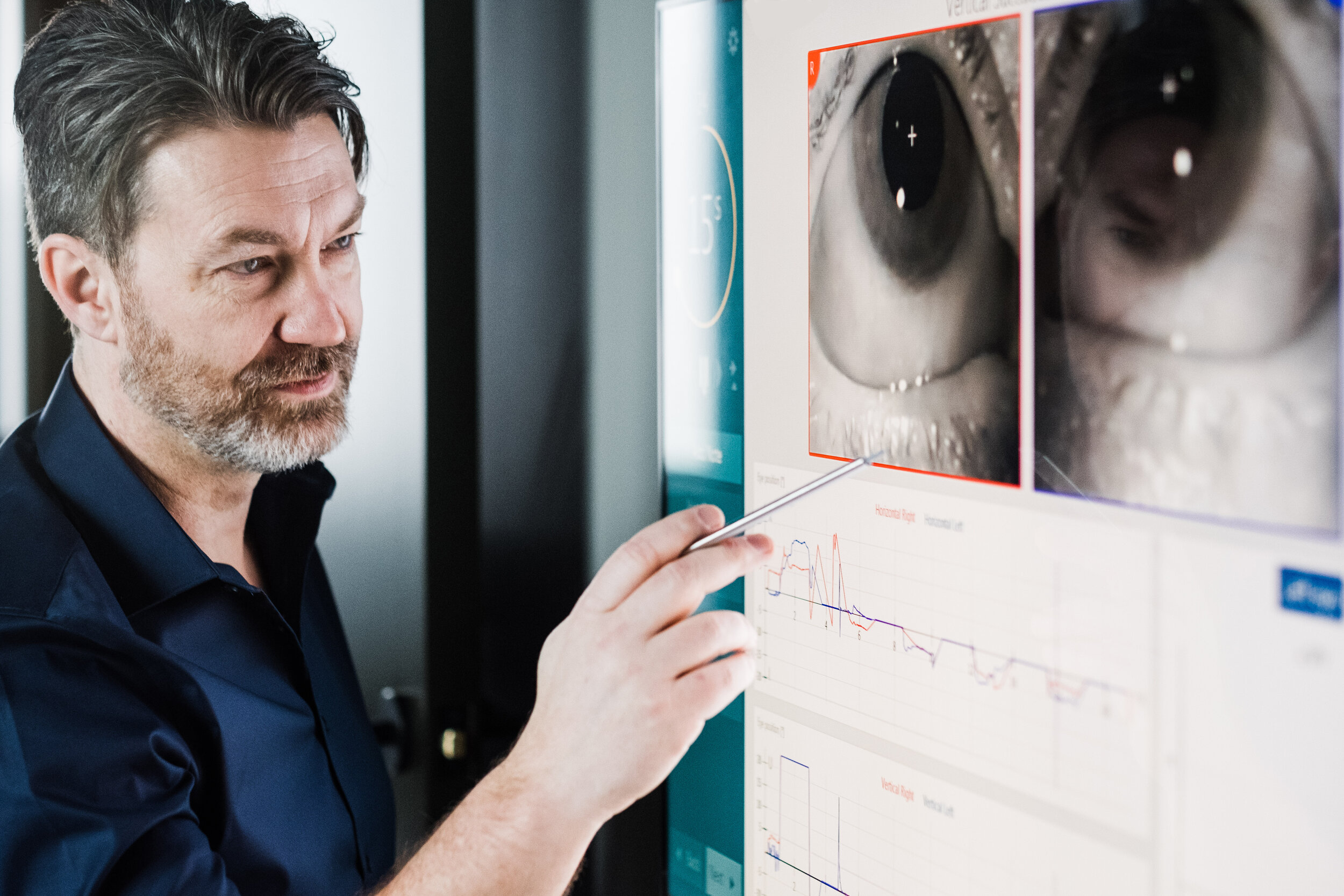
Every NeuroRescue Program is designed for your brain and your own pattern of strengths, weaknesses and fatigue. To understand that pattern, we use VNG testing to record and measure your eye movements, along with video head impulse testing and computerized balance testing, before designing your program. Read More
CLINICAL RESEARCH
Our care focuses on helping mismatched sensory systems communicate and work together again. Research suggests that a mismatch between the visual, inner ear and body position systems plays an important role in several dizziness conditions, including persistent postural-perceptual dizziness (PPPD), visual vertigo and motion sensitivity. Learn More

“I’m very, very thankful that I came here. It is the only place that I went to, out of all of them, that had the answers that I needed.”
“Dr. Zielinski and his staff are nothing short of miracle workers. I was convinced I had lost mind and the symptoms of vertigo and nausea would never cease. Dr. Zielinski is a kind and present listening ear and knew immediately how to help me. He and his team do a good job of educating and answering questions. Their care has helped me recover and go from being bed bound to living a life again.”
Our Brain-Based Approach To Vertigo And Dizziness

-
e use computerized neurological testing and targeted rehabilitation strategies designed for your brain and condition.
-
We offer intensive programs with frequent therapy sessions over 5 to 10 days, designed to give your nervous system consistent, repeated stimulation in a short period of time.
Hear From Our Patients
Christian's Story Of Recovery from TBI and Vertigo